
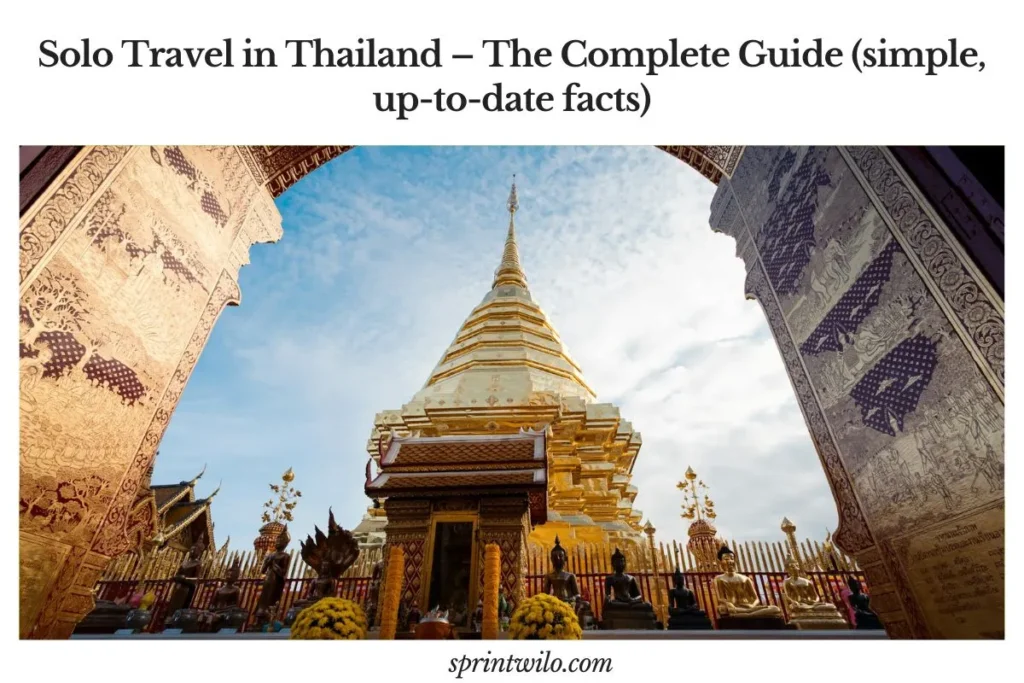
When you are on a plan to visit Asia in you next solo tour, why not look for Thailand? Thailand welcomes many solo visitors every year, and it is a top choice for people who want to travel alone because it is affordable, easy to get around, and full of things to see.
This guide gives you everything you need to plan a safe, smooth, and fun solo trip, helping you make the best of your trip.
So why wait? Let’s plan your trip to Thailand. Welcome to SprintWilo.
Table of Contents
What to know about Thailand as a solo traveller?

Entry, visa, and paperwork
Thailand does not require a visa for most short visits, and many nationalities can enter under the visa-exeption scheme, and stay up to 60 days, and the procedure may change from person to person depending on their passport. So it is important to check the Thai embassy page for up-to-date rules and regulations for your country.
Thailand is no longer requesting entry with a valid COVID-19 vaccination certificate or a COVID-19 test, and the old Thailand Pass system has been changed. But please carry evidence of six months of passport validity on the date of arrival, and an onward or return ticket should they require it at the entry point. To get up-to-date official advice, consult the Thai embassy or the U.S. State Department travel page.
When to go: seasons and weather?

Thailand has three weather patterns that include cool/dry, hot, and rainy. November to February are the most favorable total months to visit when most of the country is dry, and it is pleasant to see sights and enjoy the beach.
Differences between regions: in the Andaman coast (Phuket, Krabi), it is drier around November-April, whereas in the Gulf coast (Koh Samui), it is often good around February-April.
During the wet season (approximately May to October), heavy rain will fall, and there may be flooding and fewer tourists, but lower prices will be experienced.
As the weather is sometimes unpredictable, we advise you to take a look at national weather forecasts for the areas that you are planning to travel to.
Safety and official advisories
As a tourist destination, Thailand is usually a safe place, although the political climate and regional instability occasionally increase security concerns; most governments now advise that tourists be even more cautious in certain locations and that they can avoid border crossing with Cambodia and Myanmar.
It is important to read your country’s travel advisory page before traveling, and you can register with your own embassy and avoid visiting protest zones or crowds. The major tourist destinations, such as Bangkok, Chiang Mai, and beach islands, are generally secure, but they should always be vigilant, keep off valuables, and use approved transportation during the night.
Recent media reports have highlighted scams and safety concerns that can affect certain groups of tourists, and as a solo traveller, you should therefore be worried of the offers that are too good, unlicensed tours, and money transactions where official receipts are not given. In case you feel unsafe, call the Tourist Police through their hotline (1155).
Money: currency, costs, and tipping
The currency of Thailand is Thai Baht (THB). The exchange rates fluctuate daily, and as a guide, one baht has been trading around 0.031 USD in August 2025, though you have to check the live rates before you change money.
The ATMs are everywhere in cities and tourist destinations, and most places take cards, but the small vendors and street stalls tend to take cash only, so have a little money to spend on little things.
Budgets differ with the type of travelling. Budget travelers can afford around 1,000-2,000 THB per day (street food, hostels, local transport), mid-range travelers may spend 2,000-4,500 THB per day (private rooms, nicer meals, taxis), and those who want comfort or private tours will not have a problem spending more. Local price guides will help you to narrow down your plan of the cities and islands you will visit.
Phone, internet, and money tech
It is easy to buy a tourist SIM or an eSIM at the airport as the large carriers provide prepaid tourist packages with unlimited or large data limits, where the prices are between 349 and 899 THB, depending on the length and the data limit. International providers charge more or less the same based on the data.
Local data makes maps, ride apps, and translations functional, and most hotels and cafes provide free Wi-Fi, but a local SIM has a better coverage in the rural areas.
Transport: how to move around
Flights between Bangkok, Chiang Mai, Phuket, and other hubs are very cheap and common, and trains and overnight buses serve most cities as a slower but scenic journey.
The BTS Skytrain and MRT subway are the fastest ways to move around the city in Bangkok, and metered cabs or rideshare apps like Grab should be used to avoid overcharging.
The Airport Rail Link, taxis, and shared airport shuttles are the usual options for town accessibility, especially via the main airports. Ferries and speedboats connect the popular groups on islands, so always purchase tickets with well-known operators, and pay attention to sea conditions in case you are easily seasick.
Where to go, and how to enjoy Thailand?
It is not about where you travel but what you can do, visit, and the ways to enjoy. So now it’s time to take a look at how to enjoy Thailand.
Bangkok

You must not leave Thailand without visiting Bangkok because it is one of the most beautiful and iconic cities in the world. It has golden temples, busy markets, a number of places to visit, and enjoy yourself.
We recommend visiting the city and the temples in the mornings because the city is hot, and then continue to go everywhere with the help of the skytrain, subway, or river boats, and in the evenings, to explore all of the colors in neon lights, night markets, tasting spicy noodles, sweet mango sticky rice, and hearing the electric charges.
Chiang Mai

Chiang Mai is located in the north and is calmer than the busy cities like Bangkok. The city is surrounded by mountains, where solo travellers can visit and explore old temples, beautiful night markets, and join day trips to nearby waterfalls, hiking trails, elephant sanctuaries, and more.
Many hotels host fun social events in the evening, and you participate in them, making it one of the best places to balance culture, adventure, and new friendships in a safe and welcoming setting that feels slower than Bangkok.
Pai

Pai is also a calmer city like Chiang Mai, which is a location loved by almost all the tourists who visit Thailand. There are mountain roads with heavy winds, natural waterfalls, natural water springs, and Pai is recommended for solo travelers who love nature and rural culture than the concrete culture.
Visit lovely islands

The South Islands popular for long beaches, clear water swimming and diving, and boat trips to small islands, Phuket, Krabi, Koh Phi Phi and Koh Lanta offer different experiences: Koh Phi Phi party and nightlife, Koh Lanta quiet and peaceful, Phuket big resorts and shopping, and Krabi beautiful cliffs and sea views, so solo travelers can select the island atmosphere that best suits their mood.
Koh Samui and Koh Phangan
Koh Samui and Koh Phangan are on the other side of the country in the Gulf of Thailand, and both are popular for palm-fringed beaches, yoga retreats, and fun, with Koh Phangan famous for its monthly Full Moon Party and good yoga retreats and quiet spots, while Koh Samui is the bigger island with more resorts and activities.
Depending on where you stay on the island, you can enjoy the beach, relaxation, and fun social scenes, watching the weather seasons closely.
Ayutthaya

Ayutthaya is an old city not far from Bangkok where it is easy for solo travelers to walk or bike around old temple ruins, statues and ancient grounds that belonged to a great kingdom and it is like a time machine of our past where the calm riverside setting, cheap guesthouses and friendly people make it a calm stop to reflect on Thailand’s past while enjoying simple slow travel moments.
Sukhothai

Sukhothai is another historic town in central Thailand that’s less crowded than Ayutthaya but has old temples and Buddha images amid green fields and lotus ponds, and solo travelers often hire bikes to ride around this spacious park area.
Travellers can stop to take photos, relax, or chat with locals, a serene experience that connects you with history calmly and beautifully, far from the noise of larger cities, but still cheap and easy to do alone.
Hua Hin

A coastal town a few hours from Bangkok with long sandy beaches, fresh seafood and night markets (without the party typical of other beach towns), Hua Hin is popular among locals and visitors who seek a quieter seaside escape, and is easy and safe for solo travelers to relax and enjoy the beach, with nearby cafes, resorts, temples and waterfalls day trips to national parks.
A simple but effective solo 7-day route
A solo trip is all about planning and execution, so here is a quick and simple guide for you to plan a perfect one-week solo trip in Thailand.
Day 01 and 02
You’ll begin in Bangkok for two days. Go to the Grand Palace and Wat Pho, two of the most famous temples. Remember to go in during cooler times in the morning or at a less busy time.
In the afternoon, you can have meals and snacks at the street food stalls, which are cheap and delicious. The safest and best way to see the city when you don’t want to run into difficult traffic is by taking a riverboat ride.
Then, take two trips to Chiang Mai. As opposed to Bangkok, this northern city is slower and more tranquil. You can take a walk and see old temples inside the city limits.
Day 03 and 04
Go on a cooking class to learn how to make Thai food, or take a short hike in the hills for nature and fresh air. In the evening, the night market is a good place to try more food and meet other travelers (and shop as a form of entertainment).
Days 04, 05, and 06
The final three days are on the islands. Choose Phuket, Krabi, or Koh Samui. Phuket is full of nightlife and busy, Krabi offers beautiful cliff lines and beautiful views, and finally, Koh Samui offers both calm beaches and awesome resorts.
On the islands, hang out on the beach, swim, or take a snorkel or boat tour to nearby small islands. Finish your day by going to the beach to see the sunset.
This plan is not complicated, provides a small amount of each food group, and doesn’t feel rushed. It allows you to experience the city and the culture, and the beach life all in one route.
Final practical reminders
Now you have a complete and a comprehensive knowledge on how to plan your next Solo trip to Thailand, and let’s take a look at some of other important things you should know.
It is better if you can buy travel insurance which covers hospital treatment, return flight if you become ill, theft or if your trip is interrupted.
Verify that the insurance will cover activities you wish to engage in such as scuba diving or riding a motorbike. If your hotel includes a locker, store some unused money there, don’t store all your money in one place.
Feel free to carry your wallet in a secure bag that is zip or RFID protected when moving around. If you drive a Motor bike, wear a helmet and insure for accidents.
Solo Travel Japan To Experience The Ultimate Cultural Experience In The Country Of Future
Quick overview of what we’ve discussed
🇹🇭 Solo Travel Thailand
Your Complete Guide to the Land of Smiles
📋 Visa & Entry
- • Up to 60 days visa-free entry
- • Passport valid 6+ months
- • Onward/return ticket required
- • No COVID restrictions
- • Check embassy for country-specific rules
🌤️ Best Time to Visit
Nov – Feb
Perfect weather
Mar – May
Very hot but dry
Jun – Oct
Lower prices, fewer crowds
Regional differences: Andaman coast dry Nov-Apr, Gulf coast best Feb-Apr
🛡️ Safety & Security
General Safety
Thailand is generally safe for tourists, especially in major destinations like Bangkok, Chiang Mai, and beach islands.
What to Watch For
• Avoid border areas with Cambodia/Myanmar
• Be cautious of too-good-to-be-true offers
• Use licensed tours and official receipts
💰 Budget Guide
1 USD ≈ 32 THB (rates vary daily)
Payment Tips
ATMs everywhere • Cards accepted in most places • Cash needed for street vendors • Tipping not mandatory but appreciated
📱 Connectivity & Tech
Internet & Phone
Tourist SIM cards: 349-899 THB at airports
Coverage: Excellent in cities, good in rural areas
Free Wi-Fi: Available in most hotels and cafes
Essential Apps
• Grab (ride-sharing)
• Google Translate
• Maps.me (offline maps)
• Agoda (accommodation)
🚌 Getting Around
Domestic Flights: Cheap between major cities
Bangkok: BTS Skytrain, MRT subway

