
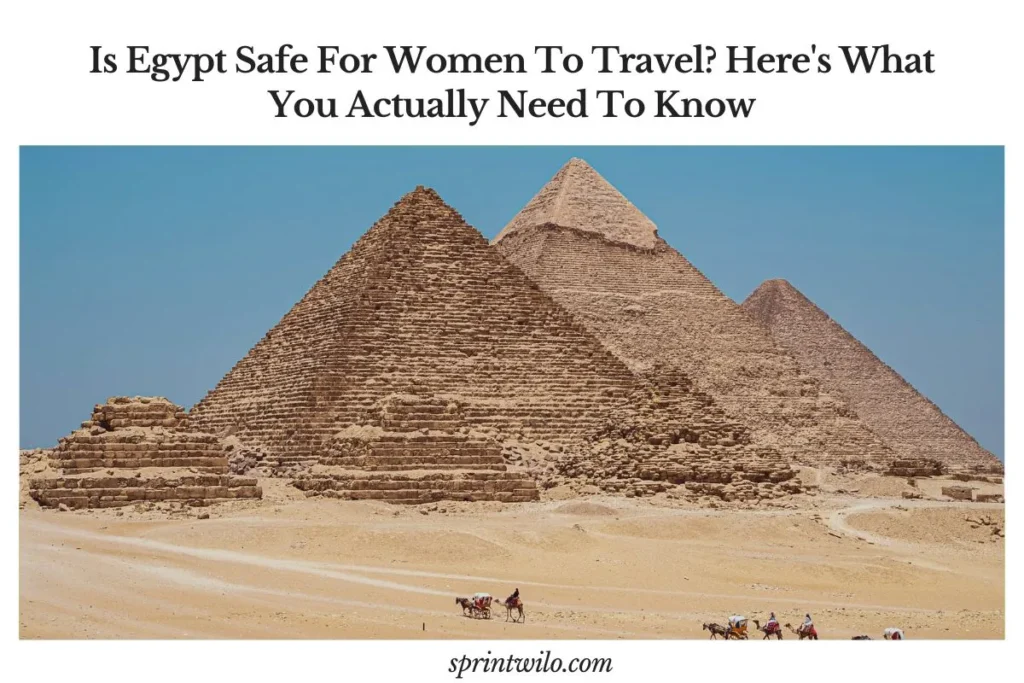
So you’re thinking about Egypt, right? Those pyramids look incredible in every photo you see, and you really want to experience walking through those ancient temples. But then you start googling and suddenly you’re reading all these warnings and scary stories, and now you’re not sure if this is even a good idea anymore.
I get it, because I went through the same thing when I was researching this trip. Let me break down everything I learned from talking to women who actually went there, reading through tons of travel reports, and looking at what the official sources say.
So, Is Egypt Safe for Women to Travel? Let’s find out. Welcome to SprintWilo.
Table of Contents
What the Travel Warnings Actually Mean

The Government Warnings Sound Scary
Okay, so the U.S. government has warnings about Egypt, and they mention terrorism and crime, which sounds really bad at first. When I first read these warnings, I almost gave up on the whole idea.
But then I dug deeper and realized something important – not all of Egypt is the same level of risk.
Where You Actually Shouldn’t Go
There are specific areas that are genuinely dangerous, and you really need to avoid them completely. The Northern Sinai and Middle Sinai Peninsula have serious terrorism problems. The Western Desert is risky unless you go with a proper licensed tour company that knows what they’re doing. And the border areas are just military zones, so you can’t go there anyway.
Most tourists never go to these places because they’re not where the famous sites are located.
About the Terrorism Thing
Look, I’m not going to pretend terrorism isn’t a real concern because that would be dishonest. There are extremist groups in Egypt, and they have attacked places before. They’ve targeted mosques, churches, tourist spots, government buildings, airports, and crowded public places.
Cairo gets mentioned a lot in the warnings because it’s a huge city with lots of potential targets. That sounds terrifying when you read it.
But here’s what changed my perspective – the Egyptian government takes security at tourist sites really seriously. You’ll see armed guards and security checks at major attractions. Most of the actual attacks happen in those restricted regions I mentioned earlier, not at the Valley of the Kings or the Egyptian Museum.
Does that mean the risk is zero? No, obviously not. But it’s way lower in the main tourist areas than the warnings make it sound.
What Actually Happens When Women Travel There

People Are Actually Nice (Surprisingly)
Almost every woman I talked to said the same thing – they were super nervous before going, especially if they had blonde hair or looked obviously foreign. They worried about how locals would treat them and if they’d be safe.
Then they actually got there and found out that most Egyptian people are genuinely kind and helpful. Like, really helpful. People offering directions, shopkeepers being friendly, locals wanting to share their culture with visitors.
One woman told me Egypt ended up being one of her favorite trips ever, which shocked her because she almost didn’t go due to fear.
But Yeah, the Hassles Are Real
Now I need to be straight with you about the annoying stuff because it definitely happens, and you should know what to expect.
Scams can happen like this: the camel ride thing near the pyramids is basically famous at this point. Someone says it costs 50 Egyptian pounds, you get on the camel, then suddenly they want 500 pounds, and you’re sitting on a camel in the desert, wondering how you got into this situation. It’s not dangerous exactly, but it’s stressful and frustrating.
Then some vendors walk up and hand you something, saying it’s a gift, and the second you accept it, they demand money. Or drivers who agree to one price then keep pushing for more tips even after you’ve already paid them what you agreed on.
Some women reported drivers following them into hotel lobbies, demanding more money, which crosses the line from annoying to actually uncomfortable and a bit scary.
Just Remember You Can Say No
This sounds simple, but it’s important – if someone is pressuring you for money or trying to get you to go somewhere or buy something and you feel uncomfortable, you can just say no and walk away. You’re allowed to do that even if they act offended or keep pushing.
Let’s Talk About the Harassment Issue

I’m Not Going to Sugarcoat This Part
Sexual harassment in Egypt is a real problem, and I’d be doing you a huge disservice if I pretended otherwise. Studies have shown that it’s incredibly widespread; one study found that 99.3% of Egyptian women have experienced some form of harassment. That number is just staggering.
Foreign women travelers definitely experience it too, though how much varies a lot from person to person.
What It Actually Looks Like
For most women, it’s things like catcalling, men staring at you constantly, verbal comments that make you uncomfortable, or guys trying to talk to you when you clearly don’t want to engage. That’s the most common stuff.
Less common but still possible is unwanted touching, like someone grabbing your arm or trying to put their arm around you for a photo. Or occasionally someone follows you around even after you’ve told them to leave you alone.
Physical assault is rare, especially in tourist areas with lots of people around, but I can’t tell you it never happens because that wouldn’t be honest.
How to Handle It When It Happens
For the catcalling and comments and staring, the advice from experienced travelers is pretty consistent: just ignore it completely. Don’t make eye contact, don’t respond, just keep walking like you have somewhere important to be, and you didn’t even notice them.
I know your instinct might be to tell them off or explain that it’s rude, but engaging with them usually makes it worse rather than better.
If something more serious happens, like someone won’t stop following you or someone touches you or tries to steal something, that’s when you call the tourist police. Their number is 126, and you should definitely save that in your phone before you even get on the plane.
Getting Around Without Losing Your Mind

The Metro Has a Secret Weapon
Cairo has a metro system, and here’s something really helpful: they have women-only train cars. These are specifically designed to give women a space away from the crowds and away from potential harassment.
If you’re taking the metro, look for the signs for the women-only sections. They’re usually at the front or back of the train, and they’re marked pretty clearly. This made such a difference for the women I talked to who used them.
Skip the Street Taxis
Street taxis can be fine, but they can also be a hassle with arguing about prices and drivers taking longer routes to charge more. Some women had perfectly fine experiences with regular taxis, but others had problems.
Uber and Careem work in Egypt, and they’re just way easier. The price is set before you get in, there’s a record of your trip, your location is tracked, and you don’t have to carry cash or negotiate anything. If something goes wrong, you have proof of what happened.
Walking Around Is Okay During the Day
During daylight hours in touristy areas and busy neighborhoods, walking around is generally fine, and lots of women do it without issues. You’ll probably get people trying to sell you stuff or catcalling, but it’s not usually dangerous.
That changes at night. The advice I heard consistently was to avoid walking alone after dark. If you’re out for dinner or whatever and it gets late, just use Uber or get your hotel to call you a taxi rather than walking back through dark streets by yourself.
Things That Actually Help Keep You Safer

Dress So You Blend In Better
This one comes up constantly in every guide and every travel report. Wear long pants or long skirts that go past your knees. Wear shirts that cover your shoulders and your waist. Bring a scarf that you can put over your head when you visit mosques.
Multiple women told me this made a noticeable difference in how people treated them and how much attention they got. When they dressed more conservatively, they felt more comfortable and got less harassment.
Is it fair that women have to do this? That’s a whole different conversation. But if you want practical advice for staying safer and having a better experience, this is one of the most effective things you can do.
Act Like You Know What You’re Doing
Even when you’re completely lost and have no idea where you are, try to look confident. Walk with your head up, look straight ahead, and move like you have somewhere to be.
Download maps on your phone before you go so you can navigate without internet. Google Maps lets you download entire cities for offline use, and this is incredibly helpful.
When you’re standing on a street corner staring at your phone, looking confused, you might as well have a sign on your back that says “I’m lost and don’t know what I’m doing,” and that’s when scammers and harassers target you.
Stop Trying to Be Polite to Everyone
In tourist areas, people will constantly approach you. “Hello my friend where are you from?” “Come see my shop, just looking is free!” “You need a taxi?” “Special price just for you!“
If you stop and politely talk to every single person who approaches you, you will never get anywhere, and you’ll end up in so many uncomfortable situations.
It’s okay to just say “No thank you” without stopping or slowing down. It’s okay not to smile. It’s okay to ignore them completely. You are not being rude by protecting your time and your safety.
Keep Your Stuff Secure
Use a bag that goes across your body so you can keep it in front of you, where you can see it and feel it all the time. Don’t use a backpack for valuables because someone can unzip it behind you without you noticing.
If someone offers to take your photo, don’t hand them your expensive camera or phone unless you’re prepared for the possibility that they might just run away with it. This happens more than you’d think.
Get travel insurance before you go that covers theft and medical stuff. Even if you’re super careful, sometimes things happen, and you’ll be glad you have coverage.
Don’t Go Near Protests or Big Crowds
Political demonstrations in Egypt can get out of hand really fast. The really scary part is that people have been arrested just for being nearby when a protest happened, even if they had nothing to do with it and were just walking past.
If you see a crowd gathering or hear people chanting or see any signs that something political is happening, turn around and go a different direction. Just stay away from it completely.
So What’s My Actual Answer About Safety?

Here’s the Real Deal
Egypt isn’t the most dangerous place on earth, but it’s definitely not the easiest place for a woman to travel alone either. The truth is somewhere in the middle, and it really depends on what you’re comfortable with.
The main things you’ll probably deal with are harassment, catcalling, scams, pushy vendors, and uncomfortable interactions with men. These happen to most women who go there at least sometimes during their trip.
Serious violence or terrorism, or assault is much less common, especially in the tourist areas, but the possibility exists, and you should be aware of it.
You Can Still Have an Amazing Trip
Lots of women go to Egypt solo and have incredible experiences seeing the pyramids and the temples, and the museums. They come back with photos and memories that last forever.
But you need to go in knowing it’s going to be challenging sometimes and you’ll need to be alert and prepared to handle difficult situations. If you’re okay with that and you really want to see Egypt, then go for it.
If you’re looking for a relaxing beach vacation where you can let your guard down completely, Egypt probably isn’t the right choice right now. Maybe somewhere like Greece or Portugal would be better for that kind of trip.
Who Should Actually Go?
If you’ve traveled solo before and you’re comfortable being assertive with people and setting boundaries, Egypt is probably manageable for you with the right preparation.
If this is your first solo trip or if you get stressed easily in challenging situations, you might want to consider going with a tour group or with a friend instead of alone. Or maybe start with an easier destination and save Egypt for when you have more experience.
There’s no shame in deciding Egypt isn’t right for you right now or that you’d rather go somewhere else. Your comfort and safety matter way more than checking something off a bucket list.
Final Checklist Before You Go

If you decide Egypt is happening, make sure you do these things:
- Get good travel insurance that covers medical emergencies and medical evacuation because hospitals in Egypt aren’t great, especially outside the cities.
- Save the tourist police number 126 in your phone under something you’ll remember.
- Download offline maps of Cairo, Luxor, and whatever other cities you’re visiting.
- Pack conservative clothes, including a scarf for religious sites.
- Check the State Department warnings right before you leave in case anything has changed.
- Tell someone at home your full itinerary and check in with them regularly.
- Learn how to say basic things in Arabic like “no” and “thank you” and “leave me alone.”
Egypt has real challenges and real risks, especially for women traveling alone. But it also has things you can’t see anywhere else in the world. The decision is yours and whatever you choose is the right choice for you.
A Complete Guide To A Peru Solo Travel in 2025
Sprintwilo

